When installing a new garage door or building a garage, one of the most important measurements to understand is the rough opening. If the opening is incorrect, the door may not fit properly or operate smoothly.
Many homeowners ask What Is The Rough Opening For A Garage Door when planning construction or replacing an existing door. In simple terms, the rough opening is the framed opening in the wall where the garage door will be installed. In this guide, we’ll explain standard rough opening sizes, how to measure correctly, and what factors affect proper garage door installation.
Read too: Door and Garage Door Companies: Choosing the Right Partner for Your Needs
What Is The Rough Opening For A Garage Door?
The rough opening for a garage door is the structural opening framed into the garage wall before the door and track system are installed.
In most cases, the rough opening should be the same width and height as the garage door size.
For example:
| Garage Door Size | Rough Opening Size |
|---|---|
| 8 ft × 7 ft | 8 ft × 7 ft |
| 9 ft × 7 ft | 9 ft × 7 ft |
| 16 ft × 7 ft | 16 ft × 7 ft |
This allows the garage door frame and track system to fit securely into the opening.
Garage doors typically operate using a sectional design, where multiple horizontal panels move along tracks. If you want to explore how sectional garage doors function, you can read more here:
https://en.wikipedia.org/wiki/Garage_door
Proper rough opening measurements are essential for safe installation and smooth door operation.
Why the Rough Opening Matters
The rough opening forms the foundation for the entire garage door system.
If it is incorrectly sized, you may experience:
- Installation difficulties
- Poor door alignment
- Increased wear on the opener
- Reduced weather sealing
Professional installers always verify the rough opening before installing a new door.
Standard Garage Door Sizes and Rough Openings
Most residential garage doors follow standardized dimensions.
Single Garage Door Sizes
| Door Size | Typical Use |
|---|---|
| 8 ft × 7 ft | Small single garage |
| 9 ft × 7 ft | Standard single car garage |
| 10 ft × 7 ft | Larger vehicles |
Double Garage Door Sizes
| Door Size | Typical Use |
|---|---|
| 16 ft × 7 ft | Standard double garage |
| 18 ft × 7 ft | Wide garage entrance |
For these doors, the rough opening typically matches the door dimensions exactly.
Additional Space Requirements Around the Opening
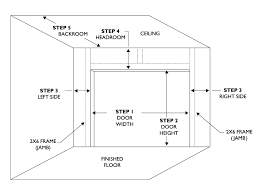
While the rough opening equals the door size, extra space is required around the opening for tracks and hardware.
Important Clearance Areas
| Area | Required Space |
|---|---|
| Side room | 3–5 inches each side |
| Headroom | 12–18 inches above door |
| Backroom | Door height + 18 inches |
These measurements allow the track system and opener to function properly.
How To Measure the Rough Opening (Step-by-Step)
If you are planning to install a garage door, accurate measurement is essential.
Step 1: Measure the Width
Use a measuring tape to measure the distance between the left and right interior framing studs.
Example:
- Width measurement = 16 feet
This means the door size should also be 16 feet wide.
Step 2: Measure the Height
Measure from the finished floor to the bottom of the header beam.
Example:
- Height measurement = 7 feet
The garage door height should match this measurement.
Step 3: Check the Side Room
Measure the space between the opening and the nearest wall.
Minimum recommended:
- 3–5 inches on each side
This space allows installation of vertical tracks.
Step 4: Measure Headroom
Headroom is the space between the top of the opening and the ceiling.
Typical requirement:
- 12–18 inches
Low-headroom kits are available if ceiling clearance is limited.
Step 5: Measure Backroom
Backroom is the distance from the garage opening to the back wall.
Minimum recommendation:
- Door height + 18 inches
Example:
- 7 ft door → about 9 ft backroom
This allows the door panels to slide fully overhead.
Rough Opening Example Layout
Here is a simplified example of a standard double garage door opening.
| Measurement | Example Value |
|---|---|
| Door width | 16 ft |
| Door height | 7 ft |
| Rough opening | 16 ft × 7 ft |
| Headroom | 15 inches |
| Side room | 4 inches each side |
| Backroom | 9 ft |
These measurements allow safe installation of most residential garage door systems.
Common Mistakes When Framing Garage Door Openings
Several common mistakes can cause installation problems.
Incorrect Opening Size
If the opening is too small or too large, the door may not seal properly.
Always match the rough opening to the door size.
Insufficient Headroom
Many homeowners forget to allow enough space above the opening.
Without adequate headroom, the track system cannot be installed correctly.
Uneven Floor
Garage floors should be level at the door opening.
An uneven floor may cause:
- Poor weather sealing
- Door alignment problems
Weak Structural Framing
Garage door openings require strong structural support.
This includes:
- Proper header beam
- Reinforced studs
- Secure anchoring
Rough Opening vs Finished Opening
Some homeowners confuse these two terms.
Rough Opening
The structural opening framed into the wall before finishing materials are applied.
Finished Opening
The visible opening after drywall, trim, and finishing work.
For garage doors, installers typically measure the rough opening, not the finished trim.
Garage Door Framing Components
The rough opening is supported by several structural elements.
Main Framing Parts
- Header beam
- Jack studs
- King studs
- Framing plates
These components distribute the weight of the wall above the garage door.
When You Might Need a Custom Rough Opening
Not all garages use standard door sizes.
Custom rough openings may be required for:
- RV garages
- Oversized trucks
- Workshop entrances
- Commercial garages
Common custom door sizes include:
- 12 ft × 8 ft
- 14 ft × 8 ft
- 10 ft × 10 ft
Professional consultation is recommended for custom installations.
FAQ: What Is The Rough Opening For A Garage Door
Should the rough opening be larger than the garage door?
No. The rough opening should usually be the same size as the garage door.
What is the rough opening for a 16×7 garage door?
The rough opening should be 16 feet wide and 7 feet high.
How much headroom is needed for a garage door?
Most garage doors require 12–18 inches of headroom above the opening.
What if my garage opening is slightly smaller than the door?
The framing may need to be adjusted before installation.
A garage door should never be forced into a tight opening.
Do all garage doors use the same rough opening measurements?
Most residential doors follow standard sizes, but custom doors may require different framing dimensions.
Can I install a garage door myself?
DIY installation is possible, but professional installation is recommended for safety and proper alignment.
Conclusion
Understanding What Is The Rough Opening For A Garage Door is essential for proper garage construction and door installation. In most cases, the rough opening should match the exact dimensions of the garage door, such as 16 ft × 7 ft for a standard double garage door.
Accurate measurements, proper framing, and sufficient clearance for tracks and hardware ensure smooth door operation and long-term reliability.
By carefully planning your rough opening and following standard guidelines, homeowners can avoid costly installation problems and ensure their garage door fits perfectly.
If you found this guide helpful, consider sharing it on social media so others can learn how to properly measure and frame a garage door rough opening.
Leave a Reply