How Many Turns On A Garage Door Spring Chart? Garage door springs are essential for lifting and lowering your garage door. They work by storing energy in the spring, which is then released to lift the door. The number of turns on a garage door spring determines the amount of energy stored in the spring, which in turn affects the force required to lift the door.
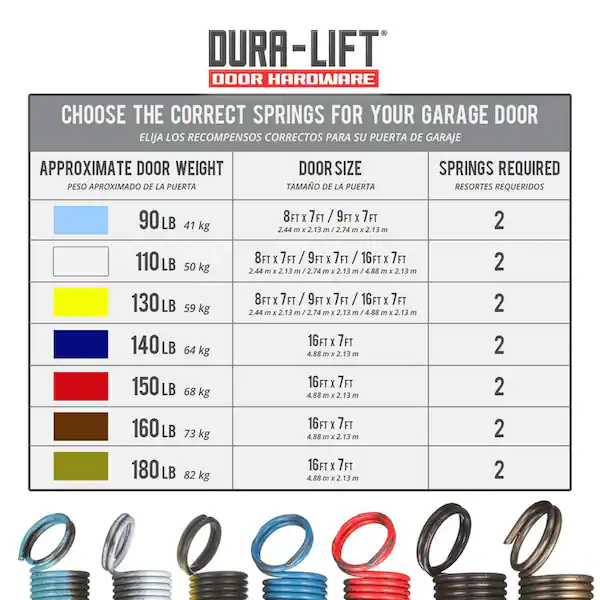
How to Read a Garage Door Spring Chart
A garage door spring chart is a table that lists the number of turns required for a given door height and spring size. The chart typically includes the following information:
- Door height: The height of the garage door in feet.
- Spring size: The diameter of the spring in inches.
- Number of turns: The number of full turns required to wind the spring.
- Quarter turns: The number of quarter turns required to wind the spring.
Using a Garage Door Spring Chart
To use a garage door spring chart, simply find the row that corresponds to your door height and the column that corresponds to your spring size. The number of turns listed in the intersection of the row and column is the number of turns required to wind your springs.
For example, if you have a 7-foot garage door with 1-inch springs, you would need to wind the springs 7 full turns plus ¾ turns.
Important Safety Tips
Never attempt to adjust or repair garage door springs yourself if you are not a qualified professional. Garage door springs are under a lot of tension and can be dangerous if not handled properly.
If you need to adjust or repair your garage door springs, it is best to hire a qualified professional.
Additional Information
In addition to the number of turns, there are a few other factors that can affect the amount of force required to lift your garage door. These factors include:
- Door weight: The heavier the door, the more force is required to lift it.
- Door balance: If the door lacks proper balance, it will necessitate applying more force to lift it.
- Spring condition: Worn or damaged springs will require more force to lift.
Conclusion
Using a garage door spring chart, you can verify that you have wound your springs correctly and that your garage door is safe to operate.
Additional Information
- A full turn is equal to four quarter turns.
- The number of turns or quarter turns is for each spring.
- You can keep track of the number of turns by drawing a chalk line on the springs.
Safety Tips
- Always wear safety glasses when working on garage door springs.
- Use a torque wrench to ensure that the springs are properly tightened.
- Do not adjust or repair garage door springs yourself if you are not a qualified professional.
Leave a Reply