If you’re thinking, “My Garage Door Won’t Open But The Motor Runs,” you’re dealing with one of the most common garage door problems in the U.S. You press the remote, hear the motor humming, but the door doesn’t move at all.
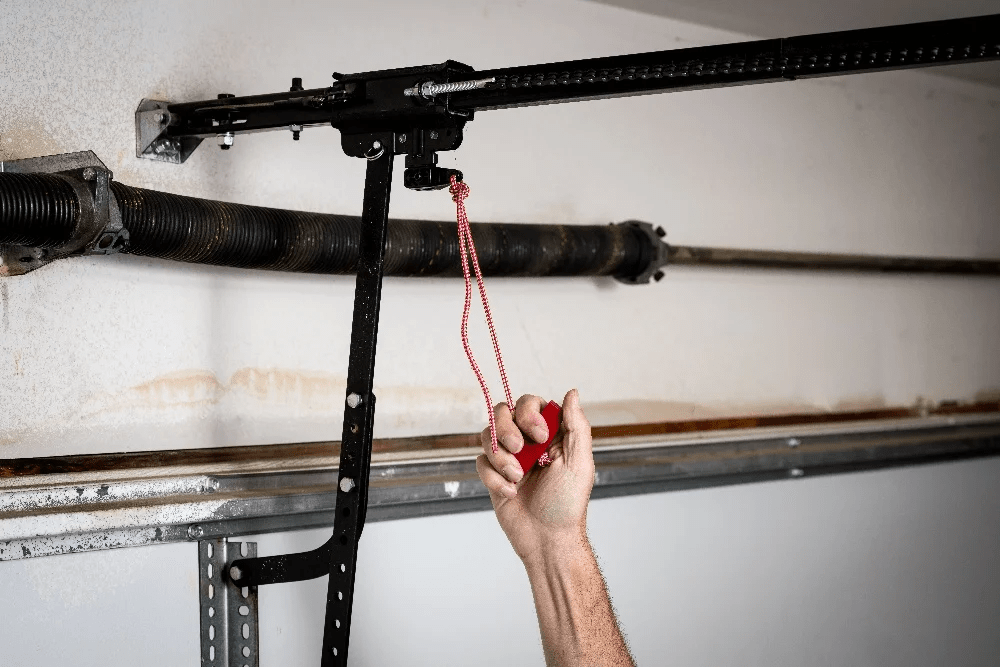
It’s frustrating — especially when you need to leave for work or get inside quickly. The good news? In many cases, the issue is mechanical and fixable. This detailed guide explains exactly what’s happening, how to diagnose it safely, and what you can fix yourself.
Read too: The Complete Guide to Tighten Chain On Garage Door Opener for Smooth Operation
Why My Garage Door Won’t Open But The Motor Runs
When homeowners search “My Garage Door Won’t Open But The Motor Runs,” they’re usually facing one of these core problems:
- Disconnected trolley (emergency release engaged)
- Stripped drive gear inside opener
- Broken torsion or extension spring
- Snapped cable or off-track door
- Worn drive belt or chain
According to industry service data, over 60% of cases where the motor runs but the door doesn’t move are caused by either a broken spring or disengaged trolley.
Let’s break down each issue clearly.
Is The Emergency Release Disconnected?


4
This is the easiest fix — and the most common cause.
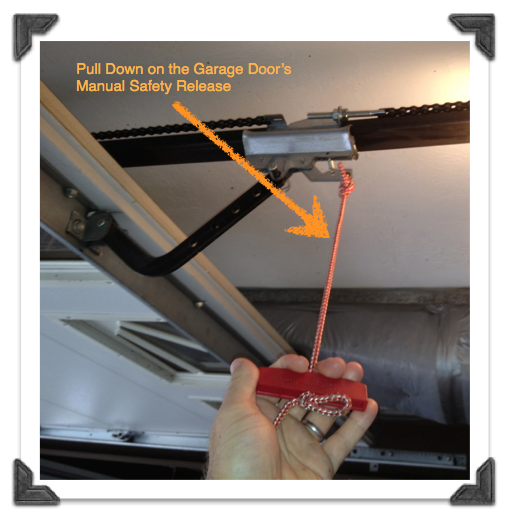
During maintenance or a power outage, someone may have pulled the red emergency release cord. That disconnects the door from the opener.
Signs This Is the Problem:
- Motor runs normally
- No grinding noise
- Door moves freely by hand
- You see a gap between trolley and carriage
How to Reconnect It (Step-by-Step)
- Make sure the garage door is fully closed.
- Pull the red cord toward the opener rail.
- Manually slide the door until you hear a click.
- Press the wall button to test.
If reconnected properly, the door should lift smoothly.
Could It Be a Broken Torsion Spring?

4
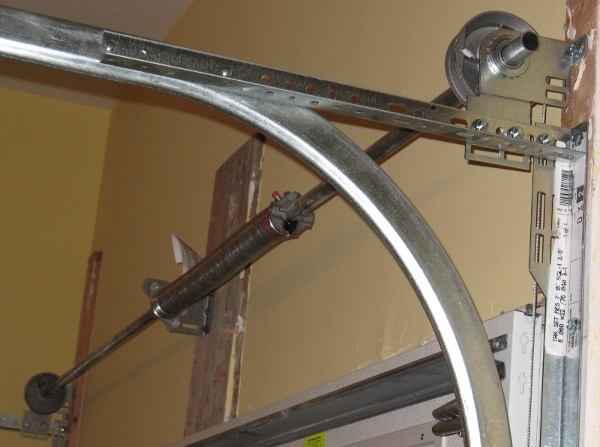
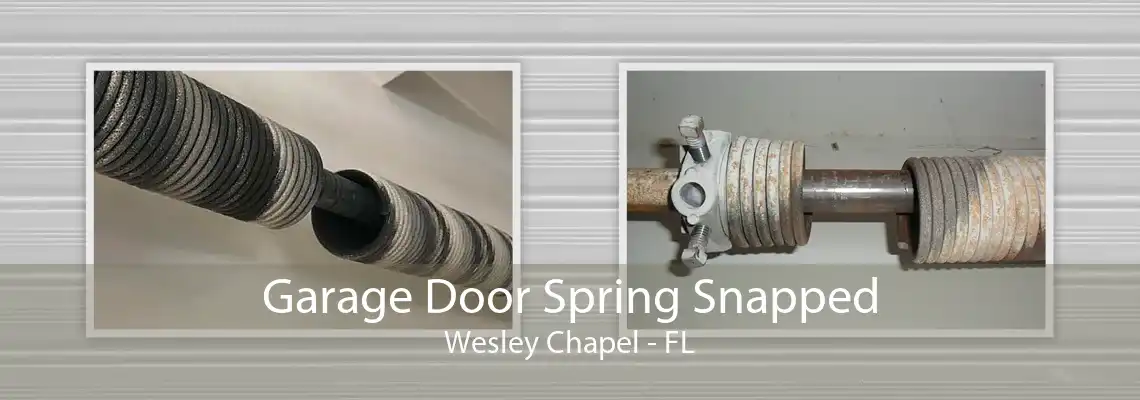
A broken spring is one of the most serious causes.
Garage door springs carry the weight of the door. Most residential doors weigh between 130–350 pounds.
When the spring breaks:
- The motor runs
- The opener struggles
- The door barely moves (or not at all)
- You may have heard a loud “bang” earlier
Quick Test
- Pull the emergency release cord.
- Try lifting the door manually.
- If it feels heavier than 20–30 pounds of resistance — stop.
That likely means the spring is broken.
Garage door springs operate under extreme tension. Attempting DIY replacement can cause severe injury. Always call a professional for spring repairs.
Is The Drive Gear Stripped?
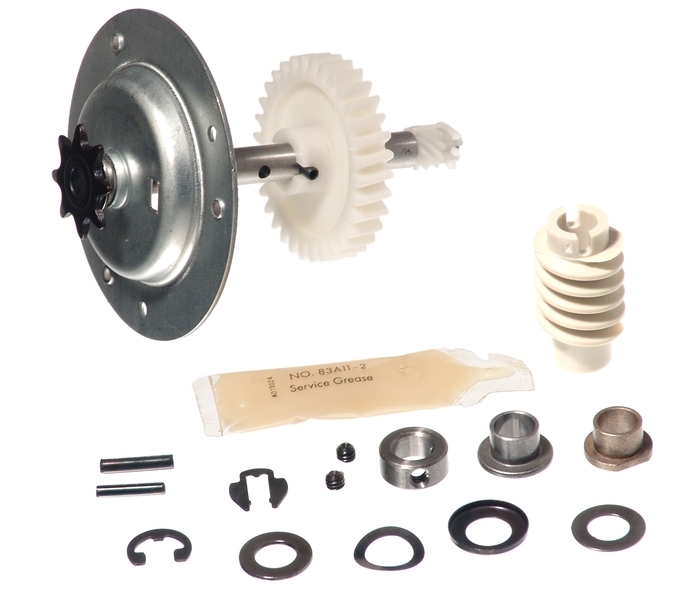
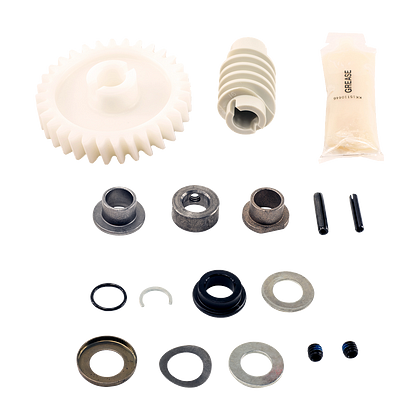
Inside the opener is a small plastic gear that connects the motor to the drive system.

4
Over time, especially in 10+ year old openers, this gear can wear out.
Symptoms:
- Motor runs loudly
- Grinding noise
- Door doesn’t move
- White plastic shavings visible inside opener
Repair Overview
- Disconnect power.
- Remove opener cover.
- Inspect main drive gear.
- Replace gear kit (usually $15–$40).
- Reassemble and test.
This repair takes about 60–90 minutes for experienced DIYers.
Could the Chain or Belt Be Loose?
Chain-drive and belt-drive systems connect the motor to the trolley.
If loose or broken:
- Motor runs
- Door stays still
- Rail may shake
Inspection Steps
- Disconnect power.
- Check chain tension (should sag about ¼ inch).
- Inspect for snapped belt.
- Tighten adjustment bolt if slightly loose.
If belt is torn, replacement is required.
Is the Door Off Track or Cable Snapped?


4
If your door looks crooked, uneven, or tilted:
Stop immediately.
Running the opener can cause severe structural damage.
Signs:
- One side higher than the other
- Loose hanging cable
- Door jerks when trying to move
Cable systems are under heavy spring tension. Professional repair is strongly recommended.
Quick Diagnosis Comparison Table
| Symptom | Most Likely Cause | DIY Friendly? |
|---|---|---|
| Motor runs quietly, door free | Disconnected trolley | Yes |
| Loud bang earlier | Broken spring | No |
| Grinding sound | Stripped gear | Moderate |
| Door crooked | Cable issue | No |
| Rail shaking | Loose chain | Yes |
How To Troubleshoot Safely (Step-by-Step Checklist)
Follow this order:
Step 1: Disconnect Power
Unplug opener completely.
Step 2: Pull Emergency Release
Test door manually.
Step 3: Assess Door Weight
- Easy lift → spring OK
- Very heavy → spring broken
Step 4: Inspect Rail and Trolley
Check for disconnect.
Step 5: Listen For Grinding
Indicates stripped gear.
Never put hands near torsion springs or cables.
How Long Do Garage Door Openers Last?
The average garage door opener lasts 10–15 years with proper maintenance.
Springs typically last:
- 7–10 years
- 10,000–20,000 cycles
For reference on how electric motors function mechanically, see:
https://en.wikipedia.org/wiki/Electric_motor
Repair Cost Breakdown
| Repair Type | Average Cost (US) |
|---|---|
| Reconnect trolley | $0 |
| Replace gear kit | $150–$300 |
| Replace torsion spring | $200–$400 |
| Cable repair | $150–$250 |
| New opener | $400–$900 |
Costs vary by state and door size.
FAQ: My Garage Door Won’t Open But The Motor Runs
Why does my garage motor run but nothing happens?
Most commonly due to a disconnected trolley or broken spring.
How do I know if my torsion spring is broken?
Door feels extremely heavy, or you saw a visible gap in the spring above the door.
Can I replace a garage door spring myself?
Not recommended. Springs are under extreme tension and can cause serious injury.
Why is my opener making a grinding noise?
Likely a stripped internal gear.
Should I replace my opener instead of repairing it?
If your unit is over 15 years old and needs major repair, replacement may be more cost-effective.
Is it safe to keep pressing the opener button?
No. Repeated attempts can damage the motor or bend the door.
Final Thoughts
If you’re stuck thinking, “My Garage Door Won’t Open But The Motor Runs,” start with the simplest causes: check the emergency release and test the door manually.
Many fixes are straightforward. But if springs, cables, or heavy components are involved, safety comes first — call a trained technician.
Garage doors are the largest moving object in most homes. Understanding how they work protects your safety and your wallet.
If this guide helped you troubleshoot your issue, consider sharing it on social media to help other homeowners solve the same problem quickly and safely.


Leave a Reply