If you’re thinking, “My Chamberlain Garage Door Opener Opens My Neighbors Door”, you’re not alone—and yes, it’s alarming. A garage door opening unexpectedly creates a serious security risk for both homes.
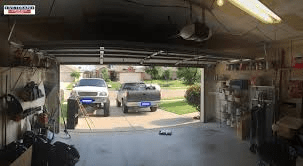
The good news? This issue is usually caused by outdated programming or shared frequency codes, and it can be fixed in minutes. This guide explains why it happens and how to permanently solve it.
Why My Chamberlain Garage Door Opener Opens My Neighbors Door
When your Chamberlain opener triggers your neighbor’s garage, it typically means both systems are using:
- The same frequency code
- An old fixed-code setting
- Incorrectly programmed remotes
Read too: The Complete Guide to Tighten Chain On Garage Door Opener for Smooth Operation
Modern garage door openers use rolling code encryption to prevent this. However, older models may still rely on static code settings.
Chamberlain openers are manufactured by Chamberlain Group, one of the largest garage automation brands in North America.
How Do Garage Door Openers Work?
Garage openers transmit radio signals between the remote and the motor unit.
These signals operate on specific frequencies—commonly 315 MHz or 390 MHz.
For background understanding of radio signal transmission, you can review Wikipedia.
Older systems used fixed DIP switch codes, meaning two nearby homes could accidentally share the same code.
Modern systems use rolling codes that change with every use, significantly improving security.
Main Causes of Cross-Opening Garage Doors
1. Fixed Code Programming (Older Units)
Older Chamberlain models may use:
- DIP switches
- Fixed radio frequency
If your neighbor has the same combination, both doors can respond to one remote.
2. Recently Replaced Logic Board
If a logic board was replaced but not fully reset, it may default to a common frequency.
3. Remote Programming Error
Sometimes remotes are accidentally programmed to multiple units during setup.
4. Shared Frequency Interference
While rare with modern openers, signal overlap is possible if codes aren’t updated.
Immediate Security Steps to Take
If your Chamberlain opener opens your neighbor’s door:
- Stop using the remote temporarily
- Inform your neighbor immediately
- Reset your opener code
- Reprogram all remotes
Security should be addressed the same day.
Step-by-Step Fix: Resetting Your Chamberlain Opener
Step 1: Locate the Learn Button
Open the motor unit light cover.
Find the “Learn” button (usually yellow, purple, red, or green).
Step 2: Erase Existing Codes
Press and hold the Learn button for 6–10 seconds until the LED light turns off.
This clears all stored remotes.
Step 3: Reprogram Your Remote
- Press and release Learn button.
- Within 30 seconds, press remote button.
- Wait for confirmation light flash.
Repeat for additional remotes.
Step 4: Test Operation
Stand inside your garage and test door opening.
Confirm neighbor’s door does not respond.
If You Have DIP Switch System
If your opener uses physical switches:
- Open motor housing.
- Locate DIP switch panel.
- Change switch pattern (create unique combination).
- Match switches inside remote.
Even adjusting one switch changes code entirely.
Upgrade Option: Install Rolling Code Technology
If your opener is 15+ years old, upgrading improves security.
Modern Chamberlain openers include:
- Rolling code encryption
- Smartphone control (myQ®)
- Enhanced interference protection
Upgrading eliminates cross-opening risk entirely.
How Common Is This Problem?
While rare in modern systems, it was more common in pre-2000 fixed-code units.
Rolling code technology was introduced to prevent:
- Code scanning
- Code duplication
- Neighbor interference
Today, most interference cases involve older equipment.
Pros and Cons of Fixing vs Replacing
Resetting & Reprogramming
Advantages:
- Free solution
- Quick fix
- Maintains existing equipment
Disadvantages:
- May not solve aging hardware issues
Replacing Opener
Advantages:
- Improved security
- Smart home features
- Quieter operation
Disadvantages:
- Higher cost ($400–$800 installed)
Additional Troubleshooting Tips
If problem continues after reset:
- Check remote battery strength
- Ensure antenna wire hangs freely
- Confirm neighbor also resets their opener
- Inspect for aftermarket universal remotes
Sometimes both homes must reset to eliminate overlap.
Security Risks If Not Fixed
Leaving the issue unresolved can:
- Allow unintended access
- Increase theft risk
- Create liability concerns
Immediate correction is essential.
FAQ: My Chamberlain Garage Door Opener Opens My Neighbors Door
1. Is this a hacking attempt?
Usually not. It’s typically a shared frequency or old fixed-code issue.
2. Will resetting erase all remotes?
Yes. You must reprogram all remotes after clearing codes.
3. Can interference happen with new openers?
Very unlikely. Rolling code systems prevent this.
4. Should my neighbor also reset their opener?
Yes. Both systems should be reset for maximum security.
5. Can universal remotes cause cross-opening?
Yes, if improperly programmed.
6. Is it time to replace my opener?
If it uses DIP switches or is over 15 years old, upgrading is recommended.
Preventing Future Garage Door Interference
- Use rolling code technology
- Avoid shared remote programming
- Install surge protector
- Keep firmware updated (if Wi-Fi enabled)
Routine security updates protect your home.
Final Thoughts
If you’re dealing with My Chamberlain Garage Door Opener Opens My Neighbors Door, don’t panic—but act quickly. In most cases, resetting and reprogramming your opener resolves the issue immediately.
For older fixed-code systems, upgrading to modern rolling code technology ensures long-term security and eliminates interference risk.
If this guide helped you fix the problem, consider sharing it on social media to help other homeowners secure their garages and protect their homes.
Leave a Reply