If your garage door remote suddenly stops working after installing new lights, you’re not imagining things. Many homeowners search for LED bulbs that don’t interfere with garage door opener because certain LED bulbs can block or weaken the radio signal between the remote and the opener. In this guide, you’ll learn exactly why this happens, how to choose the right LED bulbs, and how to permanently fix the problem without replacing your garage door opener.
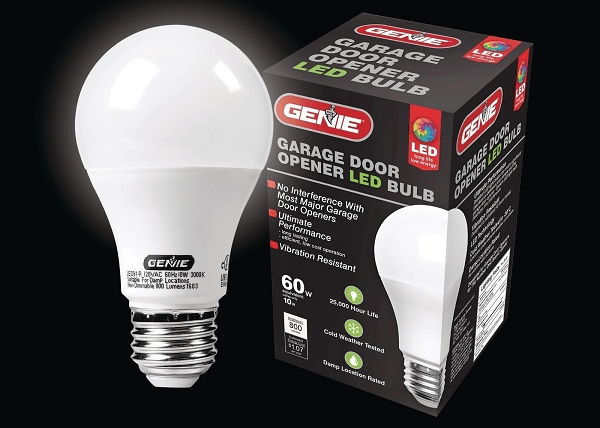
LED Bulbs That Don’t Interfere With Garage Door Opener: The Short Answer
Yes—there are LED bulbs that don’t interfere with garage door openers, but not all LEDs are created equal. The key is choosing low-RF (radio frequency) or RF-shielded LED bulbs designed specifically for garage door openers or enclosed fixtures.
Read too: The Complete Guide to Tighten Chain On Garage Door Opener for Smooth Operation
Why Some LED Bulbs Interfere With Garage Door Openers
The Root Cause: Radio Frequency Interference (RFI)
Garage door openers rely on radio signals—typically in the 300–400 MHz range—to communicate with your remote. Some LED bulbs emit electromagnetic noise, which can drown out or block these signals.
This phenomenon is known as radio frequency interference (RFI).
Why LEDs Cause More Interference Than Incandescent Bulbs
Traditional incandescent bulbs:
- Use simple filaments
- Produce almost no electronic noise
LED bulbs:
- Use internal drivers and circuits
- Can emit RF noise if poorly shielded
Key Insight: It’s not LED technology itself—it’s cheap or poorly designed LED drivers that cause interference.
Common Signs Your LED Bulb Is Causing Interference
You may have an interference problem if:
- The remote works only when close to the garage
- The remote stops working when the light is on
- The door works fine during the day, but not at night
- Replacing the bulb temporarily fixes the issue
These are classic symptoms of RF interference.
How LED Interference Affects Garage Door Openers
What Actually Happens
- You press the remote
- The remote sends a radio signal
- The LED bulb emits RF noise
- The opener can’t “hear” the remote
The result feels like a dead remote—even though it’s not.
What Makes an LED Bulb Safe for Garage Door Openers?
To avoid interference, LED bulbs should have the following characteristics:
Key Features to Look For
- Low RF emission
- FCC compliance
- Shielded internal driver
- Designed for garage door openers or enclosed fixtures
If these features aren’t listed, the bulb may cause issues.
Types of LED Bulbs That Don’t Interfere With Garage Door Openers
1. Garage Door Opener–Rated LED Bulbs
These are specifically engineered to minimize RF noise.
Why they work:
- Shielded electronics
- Tested for garage opener compatibility
- Stable light output
Best for: Plug-and-play reliability.
2. FCC-Certified LED Bulbs
Bulbs that meet strict FCC standards are less likely to cause interference.
Look for:
- FCC Part 15 compliance
- Clear labeling on packaging
Tip: FCC compliance doesn’t guarantee zero interference, but it greatly reduces the risk.
3. Enclosed-Fixture LED Bulbs (High Quality)
Higher-end enclosed-rated LEDs often have better internal shielding.
Avoid: No-name or ultra-cheap bulk LEDs.
LED Bulbs Most Likely to Cause Interference
Not all LEDs are safe for garage use.
High-Risk LED Bulbs
- Very cheap LED bulbs
- Unbranded imports
- Non-FCC-certified LEDs
- High-wattage LEDs with poor heat management
Warning: Price is often a clue—extremely cheap LEDs cut corners on shielding.
Does Bulb Brightness Affect Interference?
Yes, indirectly.
Higher Lumen Bulbs
- Use stronger internal drivers
- May emit more RF noise
Recommended Brightness
- 800–1,600 lumens is usually enough for garages
- Avoid excessive brightness unless necessary
Balance brightness with compatibility.
Color Temperature and Interference
Color temperature (Kelvin rating) does not directly cause interference.
However:
- Cool white (4000–5000K) is preferred for garages
- Warm white doesn’t reduce interference
Choose based on visibility, not RF concerns.
Step-by-Step: How to Fix LED Interference in Your Garage
Step 1: Test the Bulb
- Turn the garage light off
- Try the remote
- If it works, the bulb is the issue
Step 2: Replace With a Compatible LED
Install an LED specifically labeled as:
- “Garage Door Opener Compatible”
- “Low RF” or “Low EMI”
Test again.
Step 3: Change Bulb Location
If replacement isn’t possible:
- Move the bulb farther from the opener antenna
- Use external garage lighting instead
Step 4: Use an Antenna Extension
Some openers allow:
- External antenna relocation
- Improved signal reception
This can reduce interference effects.
Step 5: Install a Filter (Advanced Option)
RF filters can be added, but this is usually unnecessary for residential garages.
LED vs CFL Bulbs in Garage Door Openers
| Feature | LED Bulb | CFL Bulb |
|---|---|---|
| Energy efficiency | Very high | Moderate |
| RF interference risk | Medium | High |
| Lifespan | Long | Shorter |
| Cold weather | Excellent | Poor |
LEDs are still the best option—when properly chosen.
Do Smart Bulbs Cause More Interference?
Often, yes.
Smart bulbs:
- Use WiFi or Bluetooth
- Emit additional RF signals
They are not recommended inside garage door openers unless explicitly rated for that use.
What Garage Door Manufacturers Recommend
Most manufacturers advise:
- Using incandescent bulbs or
- Using LED bulbs specifically tested for opener compatibility
They often warn against generic LEDs due to interference risk.
Energy Savings: Are Compatible LEDs Worth It?
Absolutely.
Compared to Incandescent Bulbs
- Use up to 75–85% less energy
- Last 10–20x longer
- Generate less heat
You get efficiency without signal problems.
How Long Do Garage-Safe LED Bulbs Last?
- Average lifespan: 15,000–25,000 hours
- Less vibration stress than incandescent bulbs
They are ideal for garages where lights turn on frequently.
Can LED Interference Damage the Garage Door Opener?
No.
Interference:
- Does not harm the opener
- Does not damage remotes
- Only blocks communication
Once the bulb is replaced, functionality returns immediately.
Scientific Background (Simple Explanation)
LED interference occurs due to electromagnetic emissions from electronic circuits. This is a well-documented phenomenon in consumer electronics. For a general overview of electromagnetic interference concepts, you can reference this neutral source on Wikipedia:
https://en.wikipedia.org/wiki/Electromagnetic_interference
Frequently Asked Questions (FAQ)
Q1: Why does my garage door remote stop working when the LED light is on?
Because the LED bulb is emitting radio frequency interference that blocks the remote signal.
Q2: Are there LED bulbs that don’t interfere with garage door openers?
Yes. Look for garage door opener–compatible or low-RF LED bulbs.
Q3: Will replacing the bulb fix the problem immediately?
Yes. Once the interference source is removed, the remote usually works instantly.
Q4: Are incandescent bulbs better for garage door openers?
They don’t cause interference, but they use more energy and burn out faster.
Q5: Do all LED bulbs cause interference?
No. Only poorly shielded or low-quality LED bulbs cause problems.
Conclusion
Finding LED bulbs that don’t interfere with garage door opener systems is easier than it seems once you understand the cause. The problem isn’t LED lighting itself—it’s low-quality or poorly shielded bulbs that emit radio frequency noise. By choosing garage-rated or low-RF LED bulbs, you get bright, energy-efficient lighting without sacrificing garage door reliability. If this guide helped you solve a frustrating garage problem, share it on social media so other homeowners can fix it just as easily.
Leave a Reply