If you’re researching the Pros And Cons Of Wall Mount Garage Door Openers, you’re probably considering upgrading your current system—or installing one in a new garage. Maybe you’ve heard they’re quieter, sleeker, and free up ceiling space. But are they really better than traditional openers?
In this comprehensive guide, we’ll break down the real-world advantages, disadvantages, costs, installation factors, and long-term value. By the end, you’ll know whether a wall-mounted (jackshaft) garage door opener is the right investment for your home.
Read too: Door and Garage Door Companies: Choosing the Right Partner for Your Needs
Pros And Cons Of Wall Mount Garage Door Openers: Complete Breakdown
Understanding the Pros And Cons Of Wall Mount Garage Door Openers starts with knowing how they differ from traditional ceiling-mounted systems.
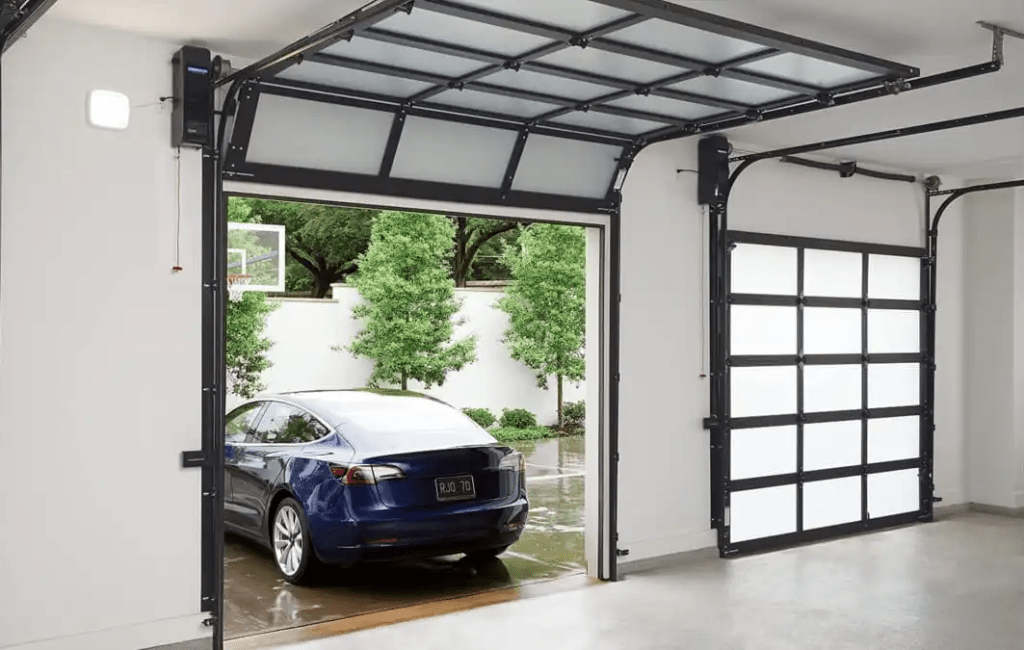
Wall mount openers—often called jackshaft openers—attach to the wall beside the garage door and operate by directly turning the torsion bar. Unlike chain or belt-drive openers, they don’t rely on a ceiling rail system.
You can learn more about garage door operating systems in general on Wikipedia:
https://en.wikipedia.org/wiki/Garage_door_opener
What Is a Wall Mount Garage Door Opener?
A wall mount garage door opener is installed on the side wall next to the garage door. It connects directly to the torsion bar, which lifts and lowers the door.
Instead of pulling the door along a rail, it rotates the torsion shaft to move the door.
Also Known As:
- Jackshaft opener
- Side-mount opener
- Wall-installed garage opener
These systems are popular in modern homes with high ceilings or garages that use overhead storage racks.
What Are the Main Advantages of Wall Mount Garage Door Openers?
Let’s start with the benefits.
1. Saves Ceiling Space
This is the biggest advantage.
Since the motor mounts on the wall:
- No ceiling rail required
- More overhead storage
- Ideal for high-lift doors
- Compatible with car lifts
For homeowners using ceiling racks, kayaks, or storage bins, this design is a major benefit.
2. Ultra-Quiet Operation
Because the opener connects directly to the torsion system:
- No chain vibration
- No belt rail noise
- Minimal ceiling resonance
Homeowners with living spaces above the garage report significantly less noise compared to chain-drive systems.
3. Modern Design & Smart Features
Many wall mount openers include:
- Built-in Wi-Fi
- Battery backup
- Smartphone control
- Automatic deadbolt lock
These features improve both security and convenience.
4. Cleaner Garage Appearance
Without a bulky rail system overhead, the garage looks cleaner and more open.
This is especially appealing in modern homes with exposed ceilings.
5. Enhanced Security
Many models automatically lock the door when closed. This adds an extra layer of protection.
According to home security professionals, integrated locking mechanisms reduce forced-entry attempts.
What Are the Disadvantages of Wall Mount Garage Door Openers?
Now let’s examine the downsides.
1. Higher Cost
Wall mount openers typically cost:
- $400–$700 for the unit
- $150–$300 for professional installation
Compared to traditional openers ($150–$350), they’re more expensive.
2. Requires Torsion Spring System
Wall mount systems only work with torsion springs.
If your garage uses extension springs, you’ll need a conversion—which adds cost.
3. Professional Installation Recommended
While DIY is possible, proper torsion system alignment is critical.
Torsion springs operate under extreme tension and can cause serious injury if mishandled.
4. Limited Compatibility in Older Garages
Some older garage setups:
- Lack proper side clearance
- Have low headroom
- Use outdated hardware
This may require structural adjustments.
Pros vs Cons Comparison Table
| Pros | Cons |
|---|---|
| Saves ceiling space | Higher upfront cost |
| Extremely quiet | Requires torsion springs |
| Modern smart features | Installation complexity |
| Clean appearance | Not ideal for all garages |
| Automatic locking system | Professional install recommended |
How Much Do Wall Mount Garage Door Openers Cost?
Estimated Total Cost Breakdown
| Item | Average Cost |
|---|---|
| Opener Unit | $400–$700 |
| Installation | $150–$300 |
| Spring Conversion (if needed) | $200–$400 |
| Total Estimated | $550–$1,000+ |
While the upfront investment is higher, many homeowners consider the space-saving and noise reduction benefits worth the cost.
Are Wall Mount Garage Door Openers Better Than Ceiling-Mounted Ones?
The answer depends on your priorities.
Choose Wall Mount If You:
- Have high ceilings
- Want overhead storage
- Need quiet operation
- Own a garage car lift
- Prefer modern smart features
Choose Traditional Opener If You:
- Want lower upfront cost
- Have limited wall clearance
- Don’t need advanced features
- Have extension springs
Real-World Case Example
A homeowner with a two-car garage and overhead storage racks switched to a wall mount opener.
Result:
- Gained 20+ square feet of usable ceiling space
- Reduced noise by approximately 40%
- Installed ceiling-mounted kayak storage
The upgrade allowed more functional use of the garage without structural changes.
Installation Requirements Checklist
Before choosing a wall mount system, confirm:
✔ Torsion spring system installed
✔ Minimum 8 inches side clearance
✔ Solid wall mounting surface
✔ Standard sectional garage door
✔ Proper electrical outlet nearby
Maintenance Considerations
Wall mount openers generally require:
- Annual torsion spring inspection
- Lubrication of bearings
- Firmware updates (if Wi-Fi enabled)
Because there’s no rail system, some maintenance tasks are reduced.
Energy Efficiency and Power Use
Most modern wall mount openers consume:
- 1–2 amps during operation
- Minimal standby power
Battery backup systems allow operation during power outages—typically 20 cycles per outage.
Safety Considerations
Garage doors weigh between 130 and 400 pounds depending on material.
Wall mount systems often include:
- Automatic reversal sensors
- Door locking mechanisms
- Motion detection lights
Proper installation is critical for safe operation.
FAQ: Pros And Cons Of Wall Mount Garage Door Openers
Q1: Are wall mount garage door openers worth the money?
If you value space-saving design, quiet operation, and smart features, many homeowners consider them worth the investment.
Q2: Can I install one myself?
DIY is possible, but professional installation is strongly recommended due to torsion spring tension risks.
Q3: Do they work with all garage doors?
They work best with sectional doors using torsion springs. They may not be compatible with one-piece tilt-up doors.
Q4: Are they quieter than belt-drive openers?
Yes. Because they eliminate ceiling vibration, they’re often quieter than both chain and belt-drive systems.
Q5: What maintenance do they require?
Minimal maintenance beyond periodic inspection and lubrication of moving parts.
Q6: How long do they last?
With proper maintenance, 10–15 years is common for modern units.
Who Should Consider a Wall Mount Opener?
Wall mount systems are ideal for:
- Modern garages
- Homeowners with living space above garage
- High-ceiling garages
- Car enthusiasts with lifts
- Smart home users
They may not be ideal for budget-focused upgrades.
Final Verdict: Pros And Cons Of Wall Mount Garage Door Openers
The Pros And Cons Of Wall Mount Garage Door Openers ultimately come down to space, budget, and long-term convenience.
They offer:
- Superior space optimization
- Quieter performance
- Enhanced security features
- Modern smart connectivity
However, they require:
- Higher upfront cost
- Torsion spring compatibility
- Proper installation
If you’re looking for a sleek, modern, and space-efficient garage solution, a wall mount opener could be an excellent upgrade.
If this guide helped you understand the pros and cons clearly, consider sharing it on social media to help other homeowners make informed decisions.
Leave a Reply