Introduction
Are you planning a garage renovation or building a new home and wondering, how wide is a single car garage door opening? You are not alone; getting this measurement wrong can lead to frustrating scratches, tight squeezes, or costly structural rebuilds. In this comprehensive guide, we will break down the exact dimensions, standard sizes, and expert tips to ensure your vehicle fits perfectly and safely every time you pull in.
How Wide Is A Single Car Garage Door Opening: The Standard Dimensions
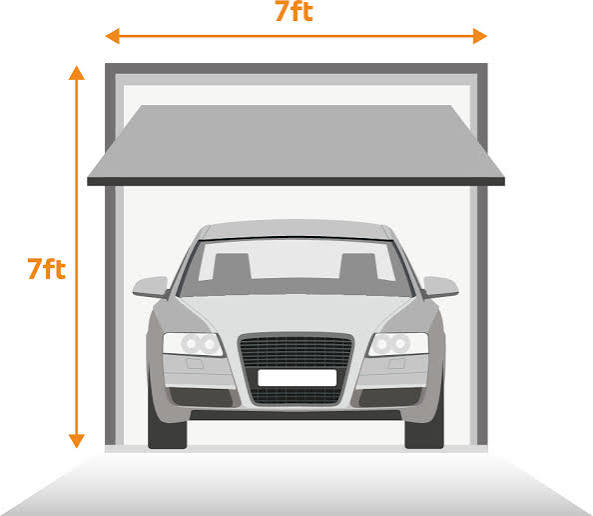
When it comes to residential construction in the United States, the standard width for a single car garage door typically ranges from 8 feet to 9 feet (96 to 108 inches). However, the industry has steadily shifted toward 9 feet as the modern default.
Why the shift? Modern vehicles are simply wider than they were decades ago. For context, a compact car like a Honda Civic is about 70 inches wide, but a mid-size SUV or a half-ton pickup truck (like a Ford F-150) can easily exceed 80 inches in width without side mirrors. A 9-foot (108-inch) opening provides roughly 14 inches of total clearance, allowing you to open your car doors comfortably without hitting the door frame or stored items.
Minimum Width vs. Recommended Width: A Quick Comparison
Choosing the right size depends on your specific vehicle and lifestyle. Here is a quick breakdown to help you decide:
| Door Width | Best For | Pros | Cons |
|---|---|---|---|
| 8 Feet (96″) | Compact cars, motorcycles, tight urban lots. | Saves space; slightly lower material cost. | Extremely tight for modern SUVs/trucks; high risk of side-swipe damage. |
| 9 Feet (108″) | Sedans, mid-size SUVs, standard daily drivers. | Industry standard; comfortable clearance; better resale value. | Requires slightly more wall space than an 8-foot door. |
| 10 Feet (120″) | Full-size trucks, vans, or owners who store bikes/tools. | Maximum ease of access; future-proofs the home. | Higher initial cost; may require custom framing in older homes. |
Expert Insight: According to the National Association of Home Builders (NAHB), optimizing garage dimensions for modern vehicle sizes is one of the top requested features in new home construction, directly impacting property resale value.
How to Measure Your Garage Door Opening Accurately
If you are replacing an existing door or framing a new one, precise measurement is critical. Follow this step-by-step tutorial to get it right:
- Gather Your Tools: You will need a sturdy steel tape measure, a small step ladder, a notepad, and a pencil.
- Measure the Width: Measure the horizontal distance of the opening at three distinct points: the top, the middle, and the bottom. Always use the smallest measurement as your official width to account for any uneven framing.
- Measure the Height: Similarly, measure the vertical distance from the floor to the top of the opening on the left side, the center, and the right side. Again, record the smallest number.
- Check Side Room (Jamb Space): You need a minimum of 3.5 to 6 inches of clear space on each side of the opening. This space is required to mount the vertical tracks and hardware securely.
- Check Headroom: Measure the distance from the top of the door opening to the lowest ceiling obstruction (like a joist or light fixture). Standard torsion spring systems require at least 12 to 15 inches of headroom.
Key Factors That Influence Your Garage Door Width Choice
Before finalizing your dimensions, consider these practical factors:
- Vehicle Size and Side Mirrors: Always measure your vehicle at its widest point, which is almost always the side mirrors when folded out. Give yourself at least 2 to 3 feet of total clearance (1 to 1.5 feet per side) for safe entry and exit.
- Storage and Workspace: Do you keep bicycles, lawn mowers, or shelving units inside the garage? A wider door prevents accidental damage to these items when maneuvering your car.
- Future-Proofing: Even if you drive a compact car today, you might upgrade to a larger vehicle in five years. Installing a 9-foot or 10-foot door now saves you from expensive structural modifications later.
For a broader understanding of garage door mechanisms, historical evolution, and structural components, you can refer to the comprehensive overview on Wikipedia’s Garage door page.
Common Mistakes to Avoid When Sizing a Garage Door
Even experienced DIYers can make costly errors. Keep these pitfalls in mind:
- Ignoring the Trim: Remember that the rough opening (the wooden frame) is larger than the finished opening (the visible space). Ensure your door size matches the finished opening.
- Assuming “Standard” Means “Universal”: Older homes (pre-1980s) often have non-standard 7-foot or 8-foot doors. Never order a new door without physically measuring your specific space.
- Forgetting About Floor Slope: If your garage floor slopes significantly for drainage, it can affect the bottom seal clearance. Mention this to your garage door installer.
Frequently Asked Questions (FAQ)
Q1: Is an 8-foot garage door wide enough for a modern car?
Answer: While an 8-foot (96-inch) door is technically wide enough for a compact sedan, it is generally not recommended for modern mid-size SUVs or trucks. The tight clearance leaves little room for error, increasing the risk of scratching your vehicle or damaging the door panels. A 9-foot door is a much safer and more practical choice.
Q2: What is the standard height for a single car garage door?
Answer: The standard height for a residential single car garage door is 7 feet (84 inches). However, if you own a lifted truck, an RV, or plan to install roof racks, upgrading to an 8-foot-tall door is highly recommended and widely available.
Q3: Can I widen an existing single car garage door opening?
Answer: Yes, but it is a major structural modification. It requires removing existing framing, potentially adjusting the roof header, and repairing exterior siding and interior drywall. It is best to consult a licensed contractor or structural engineer before attempting this.
Q4: How much clearance do I need on the sides of a garage door?
Answer: You should have a minimum of 3.5 inches of space on each side for standard track mounting. However, having 6 inches or more is ideal, as it provides ample room for hardware installation, insulation, and future maintenance adjustments.
Conclusion
Understanding exactly how wide is a single car garage door opening is the foundation of a functional, stress-free garage. While 8 feet is the absolute minimum, 9 feet (108 inches) is the undisputed sweet spot for modern vehicles, offering the perfect balance of comfort, safety, and home resale value. By taking precise measurements and accounting for your vehicle’s true width, you can avoid costly mistakes and enjoy smooth entries for years to come.
Found this guide helpful? Share this article with your friends, family, or DIY groups on Facebook, Twitter, or Pinterest to help them avoid common garage sizing mistakes!
Leave a Reply