If you’re planning to upgrade or replace your garage door system, you might be wondering: what are the different types of garage door openers and which one is best for your home.
With several technologies available today—from traditional chain systems to modern smart openers—it can be confusing to know which option fits your budget, noise preference, and garage layout. This guide explains each type clearly so you can choose the most reliable and efficient solution.
What Are the Different Types of Garage Door Openers?
When people ask what are the different types of garage door openers, they’re usually referring to the mechanism used to move the garage door along its track.
Read too: How To Replace Garage Door Roller Like a Pro? Step-by-Step Guide
There are five main types commonly used in residential garages:
- Chain Drive Openers
- Belt Drive Openers
- Screw Drive Openers
- Direct Drive Openers
- Jackshaft (Wall-Mounted) Openers
Each type has unique advantages depending on factors like noise level, durability, maintenance, and installation space.
According to industry data from the Door & Access Systems Manufacturers Association, automatic garage door openers are installed in over 70% of homes with garages in the United States, making them one of the most common smart home upgrades.
Let’s look at each type in detail.
1. Chain Drive Garage Door Openers
Chain drive openers are the most traditional and widely used type of garage door opener.
They use a metal chain (similar to a bicycle chain) to move the trolley that opens and closes the garage door.
How It Works
The motor turns a sprocket that pulls the chain along a rail system, moving the door up or down.
Advantages
Pros
- Very durable and strong
- Works well for heavy doors
- Most affordable option
- Widely available
Cons
- Noisy operation
- Can cause vibration
- Requires occasional lubrication
Best For
- Detached garages
- Budget-friendly installations
- Heavy wooden garage doors
Chain drive models are still extremely popular due to their reliability and cost-effectiveness.
2. Belt Drive Garage Door Openers
Belt drive openers are similar to chain drive systems but use a rubber or polyurethane belt instead of a metal chain.
Why Homeowners Choose Belt Drives
The biggest advantage is quiet operation.
Advantages vs Disadvantages
| Feature | Belt Drive |
|---|---|
| Noise Level | Very quiet |
| Maintenance | Low |
| Price | Medium to high |
| Durability | Excellent |
Pros
- Ultra-quiet performance
- Smooth door movement
- Minimal vibration
- Ideal for smart home upgrades
Cons
- Slightly more expensive
- Belt replacement may be needed after many years
Best For
- Homes with attached garages
- Bedrooms above the garage
- Quiet residential neighborhoods
Many modern smart garage openers use belt-drive technology for smoother operation.
3. Screw Drive Garage Door Openers
Screw drive systems operate using a threaded steel rod that rotates to move the door.
Instead of chains or belts, the trolley moves along the rod as it spins.
How It Works
When the motor rotates the threaded rod, the trolley slides along it, opening or closing the garage door.
Advantages
Pros
- Fewer moving parts
- Low maintenance
- Faster opening speed
- Strong lifting power
Cons
- Can be noisy in cold temperatures
- Requires occasional lubrication
Best For
- Wide or heavy garage doors
- Areas with stable climate conditions
Because of the simple design, screw drive systems often require less maintenance than chain drives.
4. Direct Drive Garage Door Openers
Direct drive openers are considered one of the quietest garage door opener technologies available today.
Unlike other systems, the motor itself moves along the rail, while the chain remains stationary.
Why This Design Matters
Since the motor moves instead of pulling a chain or belt, there are fewer vibrations and moving parts.
Pros
- Extremely quiet
- Very reliable
- Minimal maintenance
- Long lifespan
Cons
- Higher price
- Limited brand availability
Best For
- Homes where noise reduction is a priority
- High-end residential garages
Direct drive systems are known for exceptional durability due to their simple mechanical structure.
5. Jackshaft (Wall-Mounted) Garage Door Openers
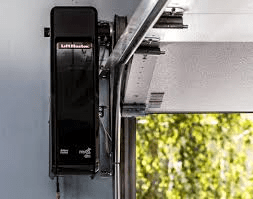
Jackshaft openers, also called wall-mounted garage door openers, operate differently from traditional ceiling-mounted systems.
Instead of using a rail across the ceiling, the motor mounts on the wall beside the garage door.
How It Works
The motor turns the torsion bar that lifts the door.
For a technical explanation of torsion systems, see:
https://en.wikipedia.org/wiki/Garage_door
Advantages
Pros
- Saves ceiling space
- Ideal for garages with high or vaulted ceilings
- Very quiet
- Sleek modern design
Cons
- More expensive
- Requires a torsion bar system
- Professional installation recommended
Best For
- Garages with storage racks on the ceiling
- Modern smart homes
- High-lift garage doors
Wall-mounted openers have become increasingly popular in new home construction.
Quick Comparison of Garage Door Opener Types
| Type | Noise Level | Cost | Maintenance | Best Use |
|---|---|---|---|---|
| Chain Drive | Loud | Low | Medium | Budget installations |
| Belt Drive | Quiet | Medium | Low | Attached garages |
| Screw Drive | Moderate | Medium | Low | Heavy doors |
| Direct Drive | Very quiet | Medium-high | Very low | Premium homes |
| Jackshaft | Very quiet | High | Low | High ceiling garages |
How to Choose the Right Garage Door Opener
Choosing the right opener depends on several practical factors.
1. Noise Level
If your garage is attached to the house, choose:
- Belt drive
- Direct drive
- Jackshaft
These options reduce vibration and sound.
2. Budget
Typical price ranges:
| Type | Average Cost |
|---|---|
| Chain Drive | $150–$250 |
| Screw Drive | $200–$350 |
| Belt Drive | $250–$500 |
| Direct Drive | $300–$600 |
| Jackshaft | $400–$700 |
(Prices exclude installation.)
3. Garage Layout
Consider:
- Ceiling height
- Door weight
- Available mounting space
For example:
- Low ceiling garage → belt or chain drive
- High ceiling garage → jackshaft opener
4. Smart Features
Modern openers often include:
- WiFi control
- Smartphone apps
- Voice assistant integration
- Security alerts
Smart systems allow homeowners to open or monitor their garage from anywhere.
Step-by-Step: How Garage Door Openers Are Installed
While professional installation is recommended, here is a simplified overview of the process.
Step 1: Assemble the Rail System
The rail connects the motor unit to the garage door.
Step 2: Install the Motor Unit
Mount the opener motor to the ceiling bracket or wall (for jackshaft systems).
Step 3: Attach the Door Arm
Connect the trolley arm to the garage door panel.
Step 4: Install Safety Sensors
Sensors must be installed 6 inches above the floor on both sides of the door.
Step 5: Connect Power and Test
Plug in the opener and test several open/close cycles.
Adjust force and travel limits to ensure smooth operation.
FAQ: Garage Door Opener Types
What is the most common type of garage door opener?
The chain drive opener is the most common because it is durable, reliable, and affordable. Many homeowners choose it for detached garages.
Which garage door opener is the quietest?
Direct drive and belt drive openers are the quietest options. They produce minimal vibration and are ideal for homes with bedrooms above the garage.
Are smart garage door openers worth it?
Yes. Smart openers allow you to:
- Open the door remotely
- Receive security alerts
- Integrate with smart home systems
They improve both convenience and security.
How long do garage door openers last?
Most garage door openers last 10–15 years with proper maintenance. Regular lubrication and occasional part replacement can extend lifespan.
Can I install a garage door opener myself?
DIY installation is possible for experienced homeowners, but professional installation is safer, especially for heavy doors and torsion spring systems.
What horsepower do I need for a garage door opener?
Typical recommendations:
| Door Type | Recommended Power |
|---|---|
| Single aluminum door | 1/2 HP |
| Double steel door | 3/4 HP |
| Heavy wood door | 1 HP |
Choosing the correct motor power ensures smooth and efficient operation.
Conclusion
Understanding what are the different types of garage door openers helps you make a smarter decision when upgrading your garage system.
Each type—chain drive, belt drive, screw drive, direct drive, and jackshaft—offers unique benefits depending on your home’s layout, budget, and noise preferences.
If you want affordability, chain drive systems work well. If quiet operation matters most, belt or direct drive options are excellent. For modern garages with limited ceiling space, jackshaft openers provide a sleek solution.
Choosing the right opener improves daily convenience, home security, and long-term reliability.
If you found this guide helpful, feel free to share it on social media so other homeowners can learn how to choose the best garage door opener too. 🚪
Leave a Reply