If your garage door reverses too early or struggles to close, adjusting the sensitivity can solve the problem. Understanding how to adjust sensitivity on Chamberlain garage door opener ensures the door operates safely without damage to the door, opener, or objects in its path. This guide provides clear instructions for homeowners to fine-tune their garage door system efficiently.

Why Sensitivity Adjustment Matters
- Prevents damage to vehicles, garage items, and the door itself
- Ensures safety by properly responding to obstacles
- Improves smooth operation, reducing wear on motor and tracks
- Prolongs lifespan of the opener
Read too: The Complete Guide to Tighten Chain On Garage Door Opener for Smooth Operation
Tools You’ll Need
- Ladder
- Screwdriver (flathead or Phillips)
- Safety gloves
- Owner’s manual (for model-specific instructions)
Step-by-Step Guide to Adjust Sensitivity
1. Disconnect Power
Unplug the opener or turn off the circuit breaker to avoid accidental activation while adjusting settings.
2. Locate the Force/Sensitivity Knobs
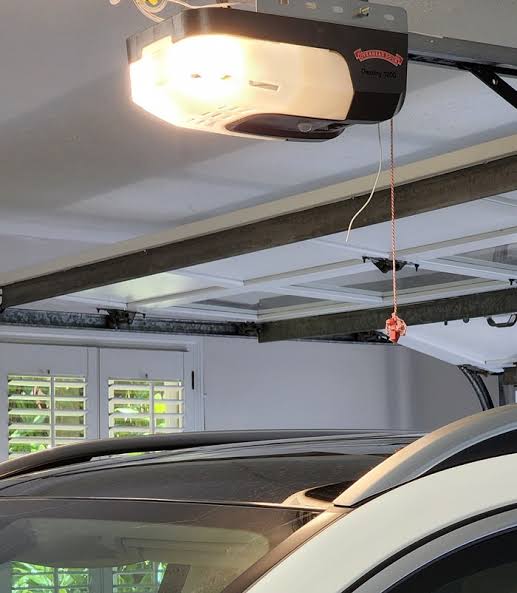
- Chamberlain openers typically have UP and DOWN force adjustment screws on the motor housing.
- Newer models may have digital sensitivity settings via the wall console or MyQ app.
3. Adjust the DOWN Force (Closing Sensitivity)
- Turn the DOWN screw clockwise to increase force (door will push harder before reversing).
- Turn counterclockwise to decrease force (door will reverse more easily).
- Make small incremental adjustments and test each change.
4. Adjust the UP Force (Opening Sensitivity)
- Turn the UP screw clockwise to increase upward force.
- Turn counterclockwise to reduce force and ensure smooth operation.
5. Test the Door
- Use the wall button and remote to cycle the door.
- Ensure the door reverses appropriately on resistance without slamming or stopping prematurely.
6. Fine-Tuning Tips
- Adjust both UP and DOWN force gradually until door operates smoothly.
- Verify that safety sensors are aligned and unobstructed.
- Lubricate rollers, hinges, and tracks to reduce resistance.
Troubleshooting Common Sensitivity Issues
| Problem | Possible Cause | Solution |
|---|---|---|
| Door reverses too soon | DOWN force too low | Increase downward force clockwise |
| Door struggles to close | DOWN force too high | Reduce downward force counterclockwise |
| Door won’t open fully | UP force too low | Increase upward force clockwise |
| Door slams when closing | DOWN force too high | Reduce downward force counterclockwise |
Expert Insight: According to Wikipedia, proper sensitivity adjustment is crucial for both safety and reliable garage door operation, especially in modern automated systems.
Safety Precautions
- Always disconnect power before making adjustments.
- Make small incremental changes to avoid damaging the motor.
- Test the door after every adjustment to ensure safe operation.
FAQ Section
Q1: How often should I adjust garage door sensitivity?
A1: Once a year or whenever you notice early reversal, door slamming, or uneven movement.
Q2: Can I adjust sensitivity myself?
A2: Yes, following safety precautions and step-by-step instructions, most homeowners can adjust it safely.
Q3: What happens if the sensitivity is set too high?
A3: The door may slam, causing damage or strain on the motor and tracks.
Q4: What happens if the sensitivity is too low?
A4: The door may reverse too easily, preventing complete closure.
Q5: Can digital Chamberlain models be adjusted via app?
A5: Yes, newer Chamberlain openers allow sensitivity adjustments using the MyQ app or wall control panel.
Q6: Should I lubricate the door after adjusting sensitivity?
A6: Absolutely. Lubrication reduces resistance and ensures the sensitivity settings work correctly.
Conclusion
Knowing how to adjust sensitivity on Chamberlain garage door opener is essential for safe, smooth, and reliable operation. Proper adjustment prevents damage, increases safety, and prolongs the life of your opener.
Share this guide with family or friends to help them maintain efficient and safe garage door operation.
Leave a Reply