If you’re installing or adjusting a garage opener, you may be wondering: What Angle Should A Garage Door Opener Rail Be? A rail that’s too steep or too flat can cause noisy operation, uneven door movement, or even premature motor failure.
The good news? The correct rail angle is simple once you understand the basic rule. In this complete guide, we’ll walk through proper alignment, measurements, and troubleshooting tips to ensure smooth, safe operation.
Read too: Door and Garage Door Companies: Choosing the Right Partner for Your Needs
What Angle Should A Garage Door Opener Rail Be?


4
The opener rail should be slightly angled upward from the door toward the motor unit, typically about 1–2 inches higher at the motor end than at the header bracket above the garage door.
In most residential installations:
- The rail should be nearly level.
- A slight upward slope toward the motor is ideal.
- The rail should never slope downward toward the motor.
The angle is usually between 3–5 degrees at most—very subtle.
Why Does the Rail Need a Slight Upward Angle?
The small upward angle ensures:
- Smooth trolley travel
- Proper door closing pressure
- Reduced strain on the opener motor
- Balanced tension along the rail
If the rail is perfectly flat or slopes downward, gravity can interfere with trolley movement.
For general reference on garage door opener mechanics, see:
https://en.wikipedia.org/wiki/Garage_door_opener
What Happens If the Rail Angle Is Wrong?
Improper rail alignment can cause:
Too Steep (Excessive Upward Angle)
- Door may not fully close
- Opener struggles under load
- Excess wear on chain or belt
- Jerky movement
Sloping Downward
- Door may slam shut
- Safety reverse may trigger
- Trolley may bind
- Increased noise
Even a 2–3 inch misalignment can affect long-term performance.
How High Should the Motor Unit Be Mounted?
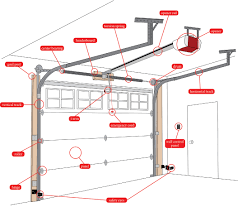
The motor unit is typically mounted to the ceiling using angle iron brackets.
General Guidelines
- Rail should be attached to header bracket above door.
- Motor end should sit 1–2 inches higher than header end.
- Ceiling mount should be stable and level side-to-side.
Never rely on drywall anchors alone. Always anchor into ceiling joists.
How to Measure the Correct Rail Angle (Step-by-Step)
Step 1: Close the Garage Door
Ensure the door is fully closed.
Step 2: Place a Level on the Rail
Use a 24-inch level placed along the rail.
Step 3: Check Header End
The rail should be nearly level at the door connection.
Step 4: Measure Motor End Height
The motor end should sit about 1–2 inches higher than the header bracket.
Step 5: Adjust Ceiling Brackets
Loosen support brackets and raise or lower slightly as needed.
Step 6: Re-tighten Securely
Use lag bolts into ceiling joists.
Does Garage Door Type Affect Rail Angle?
Yes.
Standard Sectional Doors
Follow the 1–2 inch upward slope rule.
High-Lift Doors
May require specialized rail configurations.
Low Headroom Systems
Rail must remain as level as possible while clearing door tracks.
If your door uses torsion springs and standard tracks, the typical angle guideline applies.
How Does Rail Angle Affect Door Balance?
The opener is not designed to lift the full weight of the door. The torsion springs handle most of the lifting.
If the rail angle is incorrect:
- Motor compensates unnecessarily.
- Gear wear increases.
- Travel limits become inaccurate.
Proper spring balance and correct rail alignment work together.
Common Installation Mistakes
- Mounting motor too high (over 3–4 inches difference).
- Mounting motor too low.
- Rail sagging in the middle.
- Ceiling brackets not reinforced.
- Header bracket installed too high above door.
Even small alignment issues can amplify over time.
Rail Angle Comparison Table
| Rail Position | Result |
|---|---|
| Slight upward slope (1–2 inches) | Optimal performance |
| Perfectly flat | Acceptable but not ideal |
| Steep upward slope (3+ inches) | Motor strain |
| Downward slope | Safety & closing issues |
The sweet spot is subtle, not dramatic.
Should the Rail Be Level Side-to-Side?
Absolutely.
Side-to-side misalignment can cause:
- Uneven trolley wear
- Chain tracking issues
- Excess noise
- Premature gear damage
Use a level to ensure horizontal balance across the width.
How Do I Fix a Sagging Rail?
Sagging rails are common in older installations.
Fixing Sagging
- Inspect center of rail.
- Add support strap to ceiling joist.
- Tighten chain or belt tension.
- Confirm header bracket is secure.
- Ensure no bending in rail sections.
Sagging can create friction and increase wear.
Does Rail Angle Affect Safety Sensors?
Indirectly, yes.
If the rail angle is too steep:
- Door may not close evenly.
- Safety sensors may trigger falsely.
- Travel limits may need adjustment.
Always adjust travel limits after rail modifications.
Expert Insight: Why Proper Alignment Matters
Garage door openers are designed with specific torque tolerances.
An incorrectly angled rail increases mechanical resistance.
Over time, this can:
- Shorten motor lifespan
- Strip drive gears
- Increase repair costs
Correct alignment extends opener life by years.
FAQ Section
1. What angle should a garage door opener rail be exactly?
It should slope slightly upward toward the motor, typically 1–2 inches higher than the header end.
2. Can the rail be perfectly level?
Yes, but a slight upward slope is recommended for optimal performance.
3. What happens if the rail slopes downward?
The door may close too aggressively, bind, or trigger safety reversals.
4. How do I know if my opener rail is too steep?
If the motor struggles, door hesitates, or chain tension seems uneven, check the angle.
5. Should I adjust travel limits after changing rail angle?
Yes. Always recalibrate open and close limits after repositioning.
6. Is professional installation necessary?
If you’re unsure about structural mounting or alignment, professional installation is recommended.
Conclusion
So, What Angle Should A Garage Door Opener Rail Be? The answer is simple: nearly level, with a slight upward slope of about 1–2 inches toward the motor unit.
That small adjustment ensures:
- Smooth door travel
- Reduced motor strain
- Longer opener lifespan
- Safer operation
If you found this guide helpful, share it with other homeowners tackling garage opener installation. Proper alignment today can prevent costly repairs tomorrow.
Leave a Reply