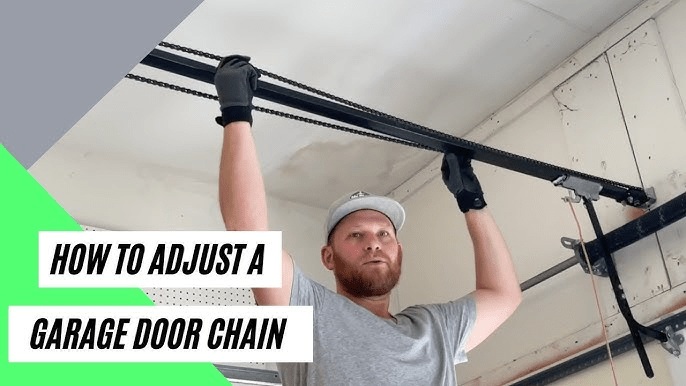
If you’re wondering how tight should chain be on garage door opener, you’re not alone. Proper chain tension is essential for smooth, quiet operation and for preventing damage to your garage door motor. Too loose, and the chain may slip or make noise; too tight, and it can strain components or shorten the motor’s lifespan. This guide helps you maintain the perfect balance for safe and reliable operation.
Why Correct Chain Tension Matters
- Smooth Operation: A properly tensioned chain ensures the door opens and closes without jerking.
- Motor Longevity: Prevents overloading the motor, reducing wear and tear.
- Safety: Loose chains can slip off sprockets or malfunction during operation.
- Noise Reduction: Correct tension minimizes rattling or clanking sounds.
Read too: How To Replace Garage Door Roller Like a Pro? Step-by-Step Guide
Signs the Chain Is Too Loose
- Audible rattling when the door operates
- Visible slack along the chain path
- Door hesitates or moves unevenly
- Chain jumps off sprockets
Signs the Chain Is Too Tight
- Motor struggles or slows when lifting the door
- Chain appears overly taut or stretched
- Excessive vibration or noise during operation
- Premature wear on the chain, sprockets, or motor
Recommended Chain Tension
Rule of Thumb:
- 1/2 inch vertical slack: Press the chain gently in the middle; it should move about 1/2 inch up or down.
- Follow Manufacturer Guidelines: Each model may differ. Check your garage door opener manual (Genie, Chamberlain, LiftMaster, etc.) for exact specifications.
Tip: Avoid over-pressing the chain during testing, as this can give a false reading.
Step-By-Step Guide to Adjust Chain Tension
- Disconnect Power: Unplug the garage door opener before making adjustments.
- Inspect Chain: Check for wear, rust, or misalignment.
- Locate Adjustment Mechanism: Typically near the motor or rear sprocket.
- Loosen Lock Bolts/Nuts: Allow the chain to move freely for adjustment.
- Adjust the Chain: Tighten or loosen until reaching 1/2 inch vertical slack.
- Align the Chain: Ensure it runs smoothly on the sprockets and track.
- Reconnect Power and Test: Operate the door slowly, listening for noise and checking for smooth motion.
- Fine-Tune: Make minor adjustments as needed, then retighten the lock bolts.
Advantages vs Disadvantages of Proper Chain Tension
| Tension Level | Advantages | Disadvantages |
|---|---|---|
| Proper (1/2 inch slack) | Smooth operation, motor longevity, safer | Requires periodic checking |
| Too Loose | Less immediate strain on motor | Slippage, uneven movement, noise, safety risk |
| Too Tight | Reduces slack issues | Overloads motor, wears chain and sprockets, vibration |
Expert Tips
- Check chain tension every 6–12 months or after extreme weather conditions.
- Apply light garage-specific lubricant to the chain to reduce wear.
- Replace worn or damaged chains with manufacturer-approved parts.
- Avoid DIY modifications to sprocket spacing; this may void the warranty.
Reference: Wikipedia – Garage Door Opener for additional mechanical and safety principles.
FAQ Section
Q1: Can I operate my garage door if the chain is slightly loose?
A: It is possible for occasional use, but prolonged operation may cause slippage, uneven wear, and potential damage to the motor.
Q2: How frequently should I check the chain tension?
A: Every 6–12 months, or after heavy use or extreme weather.
Q3: Is it difficult for beginners to adjust chain tension?
A: Moderate skill is required. Follow safety precautions and the manufacturer’s instructions carefully.
Q4: Can I use a generic replacement chain?
A: No. Always use a manufacturer-approved chain to ensure proper fit and safe operation.
Q5: What if the chain keeps loosening after adjustment?
A: Inspect sprockets, brackets, and lock bolts. Worn components may need replacement.
Conclusion
Knowing how tight chain should be on garage door opener is critical for safe, smooth, and reliable operation. Regular inspections, proper tension adjustments, and using the correct replacement parts extend your opener’s lifespan and prevent costly repairs. Share this guide with friends and family to help them maintain a safe and efficient garage door system.
Leave a Reply